
A CIVIC DESIGN PROPOSAL · 2026
Subay Pakistan
Bring Pakistan’s provinces closer to home.
What if Pakistan’s four vast Provinces / Subay became smaller, capable units? Compare the current structure and four possible reform models—from cautious reform to deep devolution. These are administrative models; they do not rename people or change identity.

SCROLL TO EXPLORE ↓
2023 CENSUS PROFILE
Choose a Province / Suba
Select any coloured area on the map to explore its full census profile.
01
Population & age
Choose a Province / Suba to load data.
02
Literacy & school
Choose a Province / Suba to load data.
03
Languages & religion
Mother tongue
Choose a Province / Suba to load data.
Religion
04
Homes & services
Choose a Province / Suba to load data.
05
Administrative composition
Proposed provincial capital—
The capital is the location of the provincial assembly and main administration. It is one headquarters—not the only city in the Province / Suba.
Existing constituent districts
Select on map
How to read the figures. “Province” is the English term; “Suba” is the familiar local term, so both are used together. Proposed figures are calculated by adding the 2023 Census results of the listed existing districts. PBS reports a national total of 241,499,431; detailed demographic characteristics cover 240,458,089 because restricted areas supplied headcounts only. Percentages may therefore not reproduce the headline population exactly. Read the National Census Report 2023 ↗
THE BIG IDEA
Four Provinces / Subay serve
241.5 million people.
There is more than one alternative.
Pakistan’s Provinces / Subay are larger than many countries. Decisions made far from communities become slower, less accountable and easier to centralize.
These four proposals preserve district integrity while testing different levels of devolution. Visitors can compare the trade-off between fewer administrations and government closer to communities.
→
DETAILED PROPOSAL GUIDES
Four scales.
Four complete lists.
Open a permanent guide to review every proposed Province / Suba, suggested capital, 2023 Census population and constituent district.
THE 12-PROVINCE MODEL
Familiar regions.
Different scales.
Choose a model above, then a historic region to explore every proposed Province / Suba and its census population.
12
PROVINCES / SUBAY FROM PUNJAB
Punjab
◇A starting point, not a verdict. Islamabad remains a separate Federal Capital Province / Suba in all four models. Final boundaries and capitals should be reviewed by an independent commission using district integrity, travel time, population, fiscal capacity and local consent.
MORE THAN NEW LINES
A federation that
works from the bottom up.
The Swiss lesson is not “copy 26.” It is to place each public decision at the lowest level capable of handling it.
Federation
Defence · currency · foreign affairs · national trade · inter-provincial infrastructure
Provinces / Subay
Education · healthcare · policing · agriculture · land · regional transport · local taxation
Municipalities
Water · waste · streets · permits · parks · neighbourhood services · community planning
DESIGN PRINCIPLES
Small enough to listen.
Strong enough to deliver.
Local consent
No boundary should be imposed without public consultation and approval in the affected area.
Fiscal responsibility
Provinces / Subay raise meaningful revenue, publish open accounts and receive transparent equalization support.
Protected municipalities
Local government becomes a constitutional institution—not a system Provinces / Subay may suspend at will.
Balanced representation
A redesigned Senate prevents populous regions from multiplying Provinces / Subay simply to gain national power.
Metropolitan unity
Karachi and Lahore receive coordinated transport, water and planning even where new provincial boundaries divide them.
Cultural security
Language, heritage and minority rights are protected nationally and within every Province / Suba.
THE SCALE
Not a copy of Switzerland.
A Pakistani interpretation.
+
Switzerland
26cantons- ~9 million people
- ~2,100 communes
- Wide variation in canton size
shared ideaSUBSIDIARITY
Power belongs as close to the citizen as practical.
☾
Selected Pakistan model
12Provinces / Subay- 241.5 million people (2023)
- ~20.1M people per Province / Suba
- Strong elected municipalities
GO BEYOND THE MAP
Your district.
Your curiosity.
Explore 136 census district profiles, compare the evidence, and create a proposal of your own.
01 / FIND YOUR PLACE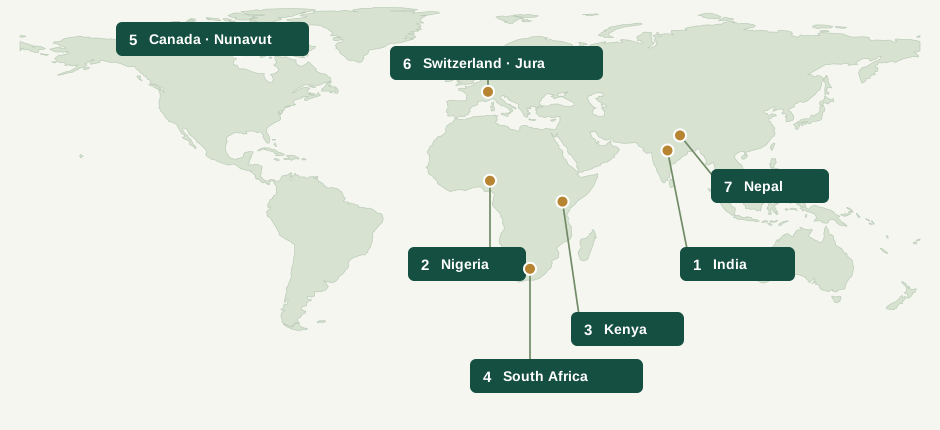 06 / WORLD EXAMPLES
My district, every model.
See where your district belongs in each proposal and share its census card.
Explore your district → 02 / COMPARE THE EVIDENCETwo places. One clear view.
Compare population, literacy and household services with matching definitions.
Compare places → 03 / MAKE A PROPOSALWhat would you create?
Select districts and see the combined statistics for your own exploratory grouping.
Build a province → 04 / THE ELECTION DESK2018 and 2024, explored.
View National Assembly snapshots side by side, plus available 2018 provincial results.
Explore results → 05 / TAKE A MAP WITH YOUMaps for curious minds.
Download proposal maps, printable sheets and classroom exercises.
Browse the gallery →06 / WORLD EXAMPLESNew provinces. What changes for people?
Seven countries changed how their regions are governed. Explore what changed for citizens, with charts and detailed country stories.
Explore world examples → 07 / LOOK A LITTLE CLOSERStories behind the numbers.
Explore population growth, large districts and the scale of each proposal.
Read map stories →Browse all district profiles · Research data, embeds & teaching resources
USING THE MAP
Questions about Pakistan’s
proposed provinces.
Understand the scenarios, find your district, and check where the numbers come from.
Is this an official new map of Pakistan?
No. Subay Pakistan is an independent civic project comparing the current provincial structure with exploratory 12, 18, 24 and 36-province proposals. The proposed names, capitals and groupings are ideas for discussion, not announced changes.
How can I find my district in each proposal?
Open the full-screen interactive map, choose a model, and use the district or province search under Controls. Select a result to see its proposed province and census profile. Use “Copy map link” to share that selection, or “Fit Pakistan” to return to the national view.
What changes between the 12, 18, 24 and 36-province models?
The models group existing district entries into different administrative units. They do not change cultural or regional identity: people can remain Punjabi, Sindhi, Pashtun, Baloch or part of any other community identity regardless of how a proposal groups districts. The guides list each proposed province, its suggested capital and its constituent districts. Islamabad is included separately in each proposal’s total. Gilgit-Baltistan and Azad Jammu and Kashmir are included on the map, with regional hover details, without adding to the proposal counts. See the methodology and coverage notes.
Where do the population and other statistics come from?
The site uses Pakistan’s 2023 Census district figures and the 2017 comparison base. It combines district figures to describe the proposed units; detailed characteristics may have different coverage. The profile shows coverage alongside population, education, household and other indicators. Review the data sources before using the figures in research.
Which elections can I explore?
The full map includes National Assembly results for 2018 and 2024. Choose a year under Election results, then select a constituency to see the winner, votes and available turnout figures. The election desk also lists available 2018 Provincial Assembly results; verified 2024 PA results are not yet included. The year-specific constituency boundaries are independently digitised, and the panel shows boundary confidence where available.
Are the constituency destinations official?
No. The destination shown under each proposal is an estimate of the constituency’s geographic overlap with the proposed units. It does not assign voters, change an election seat or represent an official redelimitation. A constituency may overlap more than one proposed province.
TRANSPARENCY
Sources, privacy
& contact.
Subay Pakistan is an independent civic-information project. It is not affiliated with the Government of Pakistan or any political party.
Contact
General enquiries: contact@SubayPakistan.org
Information and corrections: info@SubayPakistan.org
Privacy
The site does not require an account. Cloudflare and hosting providers may process ordinary technical request information to keep the website secure and available. If you email the project, only include information you are comfortable sharing.
Copyright & reuse
© 2026 Subay Pakistan. Site text and original design are reserved unless otherwise stated. Census facts remain attributable to the Pakistan Bureau of Statistics. The district-map source retains its CC BY-SA 4.0 licence and attribution.
Imprint / publisher
Publisher: Subay Pakistan — Independent Civic Project
Editorial contact: contact@SubayPakistan.org
This website presents exploratory proposals, not official boundaries or legal advice. Formal publisher address and registration details should be added here if the project becomes a registered organization.
References and data sources
- Pakistan Bureau of Statistics — National Census Report 2023: population, households, growth, age, sex, literacy, schooling, language, religion, disability, housing and services.
- Pakistan Bureau of Statistics: official census authority and supporting census publications.
- Swiss Confederation — Federalism: reference for cantonal and communal devolution principles.
- Constitution of Pakistan, Article 239: constitutional procedure affecting provincial boundaries.
- Pakistan Institute of Development Economics — NFC fiscal federalism analysis: context for provincial resource distribution.
- Pakistan district boundaries: WFP/OCHA via HDX, licensed CC BY-IGO (2022 boundaries, reviewed 2024). Proposed province groupings and colours are original analytical overlays.
Population figures for each proposal are calculated by aggregating the listed existing districts. Proposed names, boundaries and capitals remain discussion options requiring official GIS review and democratic consultation.
A QUESTION WORTH ASKING